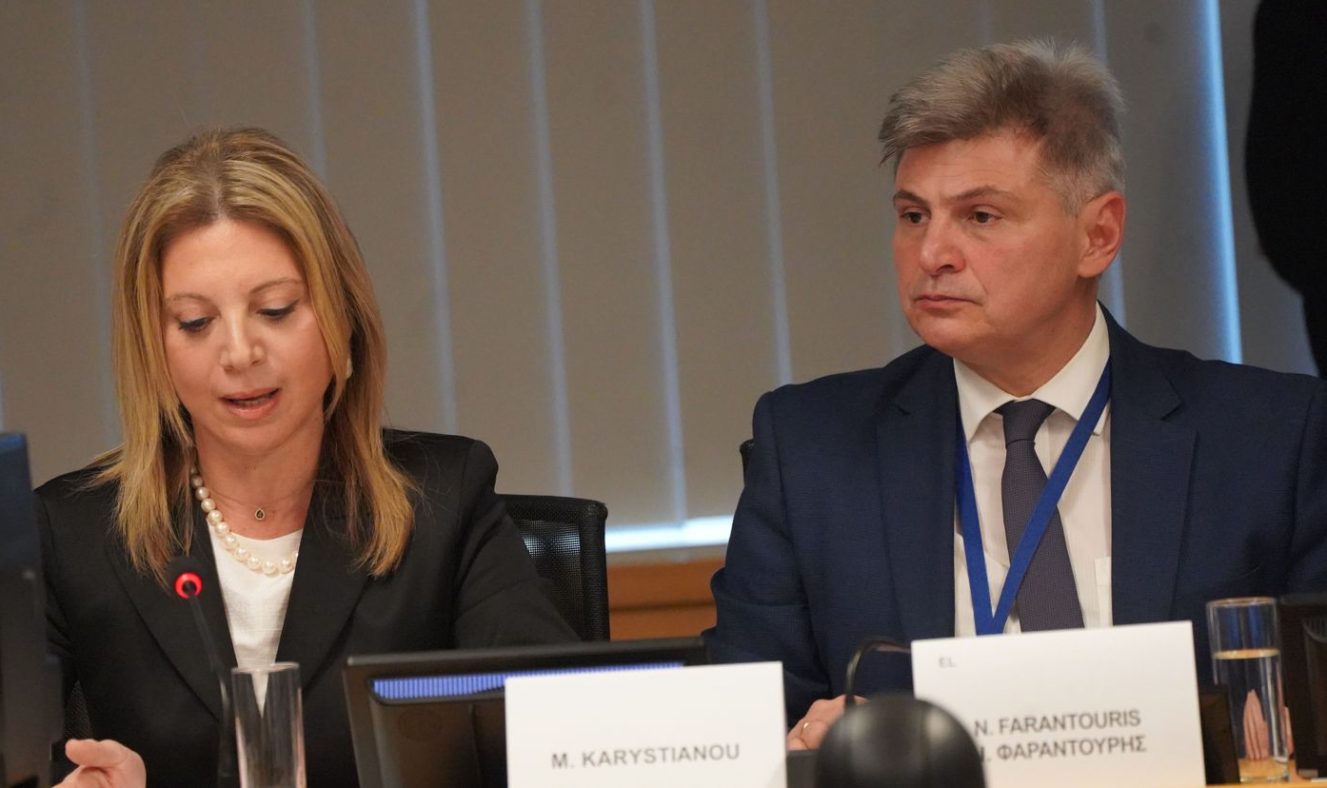
![President Of The Association Of Victims Of The Tempi 2023 Accident Maria Karystianou [L] And MEP Nikolas Farantouris [R] At An Event In Brussels. [Photo By Sarantis Michalopoulos | Euractiv]](https://voutospress.gr/wp-content/uploads/2025/12/farantouris-e1765435493501-1327x788-Copy.jpg)
H Ευρωπαϊκή Εισαγγελία «αδειάζει» την Κομισιόν για Τέμπη και ΟΠΕΚΕΠΕ
Καρυστιανού – Φαραντούρης ζητούν παράκαμψη του Άρθρου 86 και άσκηση διώξεων
Δήλωση-βόμβα εκπροσώπου της Ευρωπαϊκής Εισαγγελίας στο EURACTIV αποκαλύπτει ότι η Κομισιόν είχε ενημερωθεί απ’ το 2024 για τα εμπόδια του Άρθρο 86 σε υποθέσεις διαφθοράς στην Ελλάδα. Η Ευρωπαϊκή Εισαγγελία «δείχνει» την Κομισιόν ως αρμόδια να εξετάσει τη συμβατότητα του Άρθρου 86 του Συντάγματος περί ευθύνης υπουργών με το Ευρωπαϊκό Δίκαιο και αφήνει αιχμές για ολιγωρία της Επιτροπής.
Η δήλωση-βόμβα έρχεται μία μέρα μετά την ηχηρή εκδήλωση στις Βρυξέλλες για το θέμα από τον ευρωβουλευτή και συντονιστή της επιτροπής Συνταγματικών Υποθέσεων, καθηγητή Νικόλα Φαραντούρη με τη συμμετοχή της Μαρίας Καρυστιανού, του Juan Fernando López Aguilar, ευρωβουλευτή S&D και π. Υπουργού Δικαιοσύνης της Ισπανίας, του Χρήστου Ράμμου, π. Προέδρου της Αρχής Διασφάλισης Απορρήτου Επικοινωνιών (ΑΔΑΕ) και επίτιμου Αντιπρόεδρου του Συμβουλίου της Επικρατείας, του Ιωάννη Δρόσου, Ομότιμου Καθηγητή του Συνταγματικού Δικαίου, Νομικής Σχολής Αθηνών και της Daniela Mainenti, Καθηγήτριας Συγκριτικού Ποινικού Δικαίου στη Ρώμη.
Φαραντούρης – Καρυστιανού: να εφαρμοστεί το ευρωπαϊκό δίκαιο – Όχι στη «μαύρη τρύπα» του άρθρου 86
Νωrίτερα, σε δηλώσεις τους στο Euractiv, η Πρόεδρος του Συλλόγου Πληγέντων Δυστυχήματος «Τέμπη 2023» Μαρία Καρυστιανού και ο ευρωβουλευτής και Καθηγητής Ευρωπαϊκού Δικαίου Νικόλας Φαραντούρης, κάλεσαν την Ευρωπαϊκή Εισαγγελία και την Ευρωπαϊκή Επιτροπή να εφαρμόσουν το ευρωπαϊκό δίκαιο και την αρχή της υπεροχής και της ισονομίας.
«Η Ευρωπαϊκή Εισαγγελία και η Ευρωπαϊκή Επιτροπή οφείλουν να εφαρμόσουν την υπεροχή του Ευρωπαϊκού δικαίου απέναντι στη “ασπίδα” που προστατεύει τους υπουργούς» δήλωσε η Μαρία Καρυστιανού. «Έχουν όλα τα νομικά εργαλεία στη διάθεσή τους – αλλά δεν τα χρησιμοποιούν. Αυτό υπονομεύει την εμπιστοσύνη εκατομμυρίων πολιτών που επιδιώκουν δικαιοσύνη, οι οποίοι δεν μπορούν να ανεχθούν πολιτικούς που αποφασίζουν μόνοι τους αν είναι ένοχοι ή αθώοι» προσθέτει.
Το Εuractiv κάνει επίσης αναφορά στο σκάνδαλο των αγροτικών επιδοτήσεων και στις δηλώσεις του Υπουργού Υγείας Άδωνη Γεωργιάδη για την αποκλειστική αρμοδιότητα της κυβερνητικής πλειοψηφίας να αποφασίζει το ακαταδίωκτο υπουργών.
Σε δηλώσεις του στο Euractiv, ο ευρωβουλευτής και καθηγητής Ευρωπαϊκού Δικαίου, Νικόλας Φαραντούρης τονίζει ότι «οι συνταγματικές διατάξεις πρέπει να ερμηνεύονται υπό το φως της έννομης τάξης της Ένωσης και δεν μπορούν να την αντιστρατεύονται ή να την ακυρώνουν. Ούτε το ευρωπαϊκό δίκαιο μπορεί να ανέχεται «μαύρες τρύπες» όπως το Άρθρο 86 που καταλήγουν να λειτουργούν ως απόλυτη ασυλία και «καταπίνουν» βασικές αρχές της ενωσιακής μας έννομης τάξης, της έννομης προστασίας και του κράτους δικαίου».
Η Ευρωπαϊκή Εισαγγελία «αδειάζει» την Κομισιόν: «Σας είχαμε ειδοποιήσει»
Με δηλώσεις στον Euractiv, εκπρόσωπος της Ευρωπαϊκής Εισαγγελίας «αδειάζει» την Ευρωπαϊκή Επιτροπή αποκαλύπτωντας ότι η Λάουρα Κοβέσι «είχε επικοινωνήσει με τον τότε Επίτροπο Δικαιοσύνης Didier Reynders τον Ιανουάριο του 2024, καλώντας την Ευρωπαϊκή Επιτροπή να δράσει κατά του καθεστώτος ασυλίας της Ελλάδας. Ο Επίτροπος Reynders απάντησε ένα μήνα αργότερα, αλλά σύμφωνα με πρόσωπο με πρόσβαση στην αλληλογραφία, η Επιτροπή απλώς «έλαβε γνώση», και δεν ακολούθησαν περαιτέρω βήματα.
Φαραντούρης και Καρυστιανού επέκριναν την Κομισιόν τονίζοντας ότι ως θεματοφύλακας των συνθηκών της ΕΕ, θα έπρεπε να είχε δράσει νωρίτερα. «Τι εμποδίζει την Επιτροπή από το να δράσει αποφασιστικά και να ξεκινήσει διαδικασία κατά του κράτους μέλους επί παραβάσει; Μήπως υπάρχουν ειδικές σχέσεις με την ελληνική κυβέρνηση που εξηγούν αυτήν την αδράνειά της και τις παραλήψεις της;» διερωτάται η Μαρία Καρυστιανού.
Σύμφωνα με το Euractiv, η Ευρωπαϊκή Επιτροπή αρνήθηκε να απαντήσει στο αίτημα για κάποιο σχόλιο.
Δείτε το άρθρο:
Mother of train-crash victim urges EU prosecutor to override Greek ministers’ immunity
The crash still dominates Greek politics, as Article 86 of the Constitution blocks any prosecution of ministers without parliament’s approval
This article has been updated with the EPPO’s response
EU prosecutors should uphold the primacy of EU law and move beyond what she calls Greece’s “constitutional shield” protecting ministers, Maria Karystianou, a mother whose daughter died in the biggest train crash in Greece in recent years, told Euractiv.
The deadly collision on the Athens-Thessaloniki line killed 57 people, most of them youngsters, and continues to dominate national politics nearly two years later, as one controversial article in the Greek Constitution prevents courts from pursuing ministers unless parliament grants permission.
“The European Public Prosecutor’s Office (EPPO) has a duty to seek the truth and prosecute the politicians responsible for the deaths of 57 people,” said Karystianou.
Just eight days before the crash, the then Transport Minister, Kostas Karamanlis, publicly dismissed safety warnings raised by opposition parties and railway staff. He resigned on 2 March 2023, citing “political responsibility”.
Before the accident, EU Chief Prosecutor Laura Kövesi had already opened an investigation into a 2014 contract for signalling and remote-control upgrades on the Athens–Thessaloniki–Promachona railway. The EU-funded modernisation, long delayed, would likely have prevented the collision, Kövesi has said.
“If the EU funds for this contract had been used properly, my child would be alive today,” echoed Karystianou.

Thousands of Greeks gathered in front of the EU Parliament last February to protest Article 86 – Photo source: Euractiv
Give that only the Greek parliament can authorise the prosecution of ministers, and the governing majority routinely blocks such requests, Karystianou argued that Kövesi should apply the principle of primacy of EU law and the EPPO Regulation (2017/1939).
“She has all the legal tools at her disposal – but she is not using them. This undermines the trust of millions of citizens seeking justice, who cannot tolerate politicians deciding for themselves whether they are guilty or innocent,” she added.
The immunity debate has also resurfaced amid the recent EU farm scandal, when the EPPO sought to prosecute two Greek ministers, and Health Minister Adonis Georgiadis insisted that the governing majority alone determines whether ministers can be investigated.
A ‘black hole’ for Europe
At an event in Brussels on Tuesday, Greek leftist MEP Nikolas Farantouris warned that provision 86 in the Greek Constitution acts as a “shield of impunity” for political figures.
A professor of EU law, Farantouris, presented on Tuesday a legal opinion asserting that EU law must prevail over conflicting national provisions, including constitutional clauses.
“Constitutional provisions must be interpreted in the light of the Union legal order and must not run counter to it or render it ineffective,” he told Euractiv. Article 86 of the Greek constitution, he argued, creates a “black hole” in the EU’s rule-of-law architecture.
According to Farantouris, the EU and the EPPO should bypass the article and prosecute the responsible politicians. Otherwise, even the last hope in the European institutions will be lost, creating the “perfect fertiliser for Euroscepticism.”
Article 29 of the EPPO Regulation states that when national immunity rules obstruct an investigation, the EU prosecutor must issue a reasoned request to have those protections lifted, following national procedures.
In an emailed response, the EPPO told Euractiv that it did not want to engage in legal discussions on the primacy of EU law.
“The authority vested with the responsibility to ensure proper implementation of EU law is the European Commission and the only institution with authority to interpret EU law is the European Court of Justice,” the EPPO said,
“The EPPO is the independent public prosecution office of the European Union. It is responsible for investigating, prosecuting and bringing to judgment crimes against the financial interests of the EU,” it added.
Commission under fire
An EPPO spokesperson told Euractiv that Kövesi wrote to then Justice Commissioner Didier Reynders in January 2024, urging the European Commission to act against Greece’s immunity regime.
Reynders replied a month later, but according to a source familiar with the exchanges, the Commission merely “took note”, and no further steps followed. The same source stressed that as long as Article 86 remains unchanged, the EPPO’s hands are tied.
Meanwhile, Karystianou lashed out at the Commission, saying that, as the guardian of EU treaties, it should have acted earlier, as Athens has long failed to meet its transport safety obligations.
“What is preventing the Commission from acting decisively… and initiating proceedings against the member state for violations? Could there have been special ties with the Greek government explaining its inaction and omissions?” Karystianou asked.
The European Commission did not respond to Euractiv’s request for a comment.


Διονύσιος Βούτος
Δημοσιογράφος
45 χρόνια στην δημοσιογραφία. Δημοσιογράφος ΕΡΤ